Why Does God Allow Mass Suffering or Genocide?
Why does God allow mass suffering and genocide when He has the power to stop it? I’m going to ask forgiveness in advance, but I am probably going to sound a little cold in the way I handle this question. Not because I do not care. I care. But for the sake of argument, I have to strip away much of the emotion so I can examine the principles underneath our reasoning. I’m not saying suffering is unimportant. Quite the opposite.
However, humans have a tendency to react more strongly to suffering that is identifiable with one event than they do to suffering occuring individually across separate events. Let me give you two examples.
100 people die in an aircraft crash due to systems failure. 100 people also die from cancer on the same day. Can we really say one contains more suffering than the other? We can argue different experiences, sure, but we cannot know the actual calculation of suffering or where the scale tips in either direction.
What about a school shooting that costs the lives of a hundred children? On the same day, 100 children are killed in individual cases of gang violence in the same country. Is the suffering magnified in the school shooting compared with the individual murders from gang violence?
I’m simply arguing a stronger reaction to one does not equal greater suffering in one or the other.
I’m not arguing genocide and daily violent crime are identical. They’re not. They have distinct differences that cannot be dismissed. However, those differences do not automatically make one more horrific than the other simply because suffering is grouped together in one and not in the other.
When we look at genocide or the same number of deaths in daily crime, I think it’s necessary to recognize that one individual never experiences the suffering of 10,000. Individual suffering remains individual suffering even when it occurs alongside the suffering of millions due to the same dictator. It’s just easier to process one victim of gang violence (multiplied 10,000 times) than it is to process mass genocide (for like a thousand very good reasons). But one is not less valid than the other, nor any less horrifying.
The major issue I want to address is whether grouping the suffering of thousands, even millions, into the evil of one dictatorship actually changes the principle governing God’s interaction with, and permission of, suffering.
Can a Good God Allow Mass Suffering?
Can we actually establish that at some point, at some calculated level of suffering, God’s lack of intervention becomes incompatible with goodness?
If it exists, we’ll call it Level H (for “horrifying” beyond compatibility with goodness).
Now, I’m going to assume we can agree there is a possible point, or spectrum of points, where God’s lack of intervention in suffering is compatible with goodness. This can be as simple as God allowing a child to scrape her knee because she was playing too rough on the cement with her brother. We’ll call this Level A (for “acceptable” for the sake of ultimate good). If we can’t agree here, we’re not going to agree and there’s no point in reading further.
If there is a point of Level H, then we have to be able to explain, at least roughly, where that point is and why it exists. Mass suffering is often treated as if it obviously crosses that line.
I’m going to argue mass suffering does not establish Level H. In other words, I do not think the existence of mass suffering, by itself, proves God’s lack of intervention has become incompatible with goodness.
We Must Divide Magnitude From Moral Principle
What I am not arguing is one murder is an equivalent horror to mass genocide. But does an increase in the number of victims change the moral principles governing God’s actions? Should He have one principle governing one murder and a different principle governing the mass murder of 100?
I don’t think He needs to. Can He? Yes. Is He required to in order to maintain goodness? I wouldn’t concede that.
If there are morally sufficient reasons that coherently explain why Level A exists, then sheer multiplication of victims doesn’t eradicate those reasons.
Again, I am not discounting the sheer horror of mass suffering and genocide as a whole. I am just examining the principles of God’s government of creation.
Biblical Examples of Mass Destruction
I cannot fairly evaluate the Holocaust or other modern experiences of mass genocide. I can evaluate biblical events that closely match.
I think sufficiently horrifying examples of God’s “potential Level H” violation of goodness in the Bible are examples in which God directed mass death to occur—with infants included. Such a statement often causes people to sit up in shock. And rightly so.
However, before the reader gives Christianity the middle finger, the reason I want to explore these examples is because the Bible provides God’s reasoning for these examples in particular. And if there is sufficient reasoning behind some events of mass genocide, even the direction of mass genocide, then we cannot claim Level H is established just because there are modern versions of mass genocide.
Let’s Start With the “Easier” Option—the Flood
I say “easier” only because people don’t tend to challenge God’s reasoning on this example. They challenge God’s reasoning on examples such as sending Israel in to destroy entire cities or sending Assyria or Babylon in to destroy Israel. But the flood? That tends to make more sense to people. Tends to.
Let’s see what the Bible says:
“The Lord saw how great the wickedness of the human race had become on the earth, and that every inclination of the thoughts of the human heart was only evil all the time.”
Genesis 6:5
We have an omniscient God who recognizes that evil thought and violent behavior corrupted all of the earth (Gen. 6:5, 11–13). He found only one blameless man and decided to spare his family: “Noah was a righteous man, blameless among the people of his time…” (Gen. 6:9).
God uses the flood to eradicate most of humanity and an ark to save Noah’s family. Can we blame Him? If we made this decision on our own, we would be guilty of murder. But a judge can rightfully sentence one man to the death penalty and, by direct consequence, orphan a child. We don’t call that judge corrupt simply because the consequences of his judgement directly damaged the life of an innocent child. Is this equivalent? No. But it is sufficient to evaluate the principle.
In the same way, God is the Judge of all the Earth (Gen. 18:25). It is in His rightful authority to cast judgement and punishment upon the sins of mankind. And you may not agree with His decisions.
But does that mean the reasoning behind them is in violation of goodness? I don’t think that conclusion is established.
Here’s a Harder One—Babylon
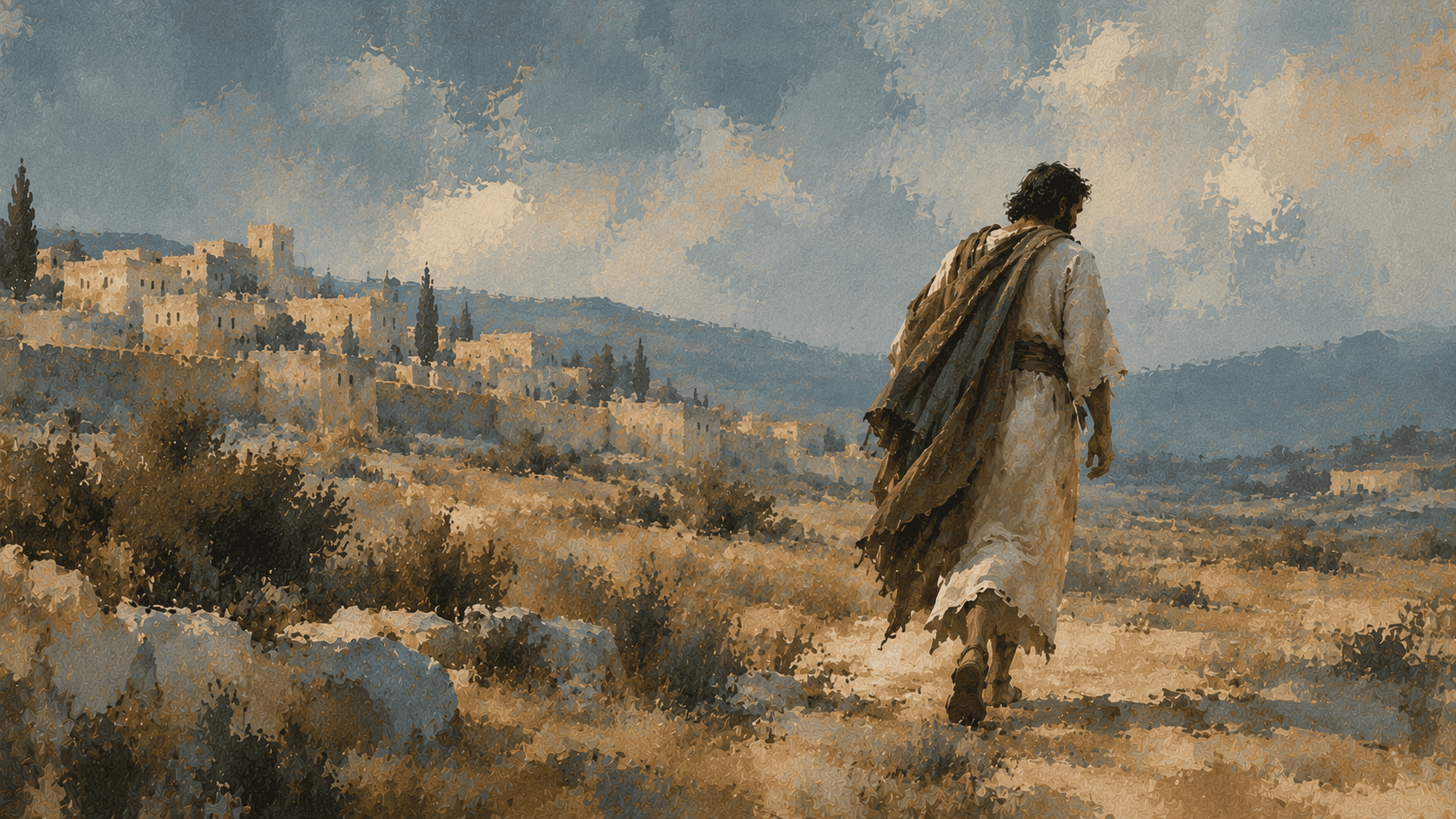
Habakkuk gives us profound insight into the reasoning behind Babylon’s mass killing and destructive rampage through Judah.
In Habakkuk 1:2–4, the prophet complains there is massive violence, strife, conflict, and perverted justice in Judah. He wants to know why God is not dealing with it. God answers that He will raise up the Babylonians, a prideful and terrifying people, who will come in violence, make captives, and overthrow fortified cities.
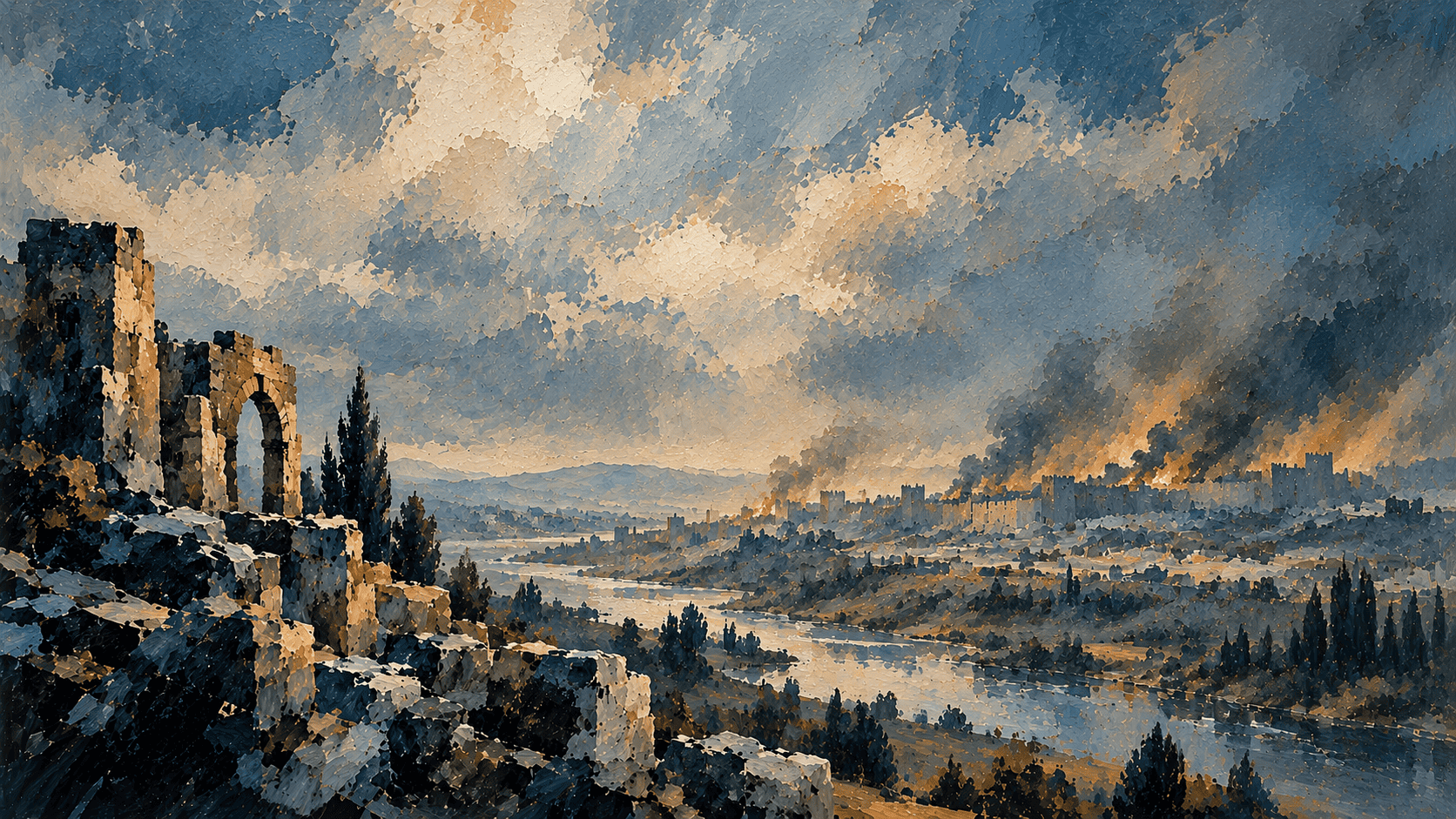
The Book of Lamentations covers the sheer magnitude of the devastation. It’s horrifying.
So Habakkuk complains to God about the Babylonians: “Why are you silent while the wicked swallow up those more righteous than themselves?” (Hab. 1:13).
In response, God rebukes the arrogance and greed of the Babylonians and declares punishment on Babylon in return in Habakkuk 2.
The actual big-picture timeline looks like this:
Judah is wicked, so God sends in the Babylonians to punish them—after a massive season of warnings to repent. The Babylonians are wicked, so God declares they will be punished in turn.
Does any of this establish a Level H? Has God actually violated His goodness in exercising mass justice?
I’m Not Saying Modern Genocide Is Divine Judgement
The reason I am using these cases is because they provide examples where I can analyze God’s reasoning in cases of mass destruction. God provides the reasoning. In modern cases, I do not have any divinely revealed reasoning.
The biblical cases provide evidence that scale itself does not destroy moral justification. Scripture itself gives cases where scale is massive but God provides coherent reasons for His decisions.
My goal here is not to say every genocide is judgement. My goal is to say if God can reasonably allow, or even direct, mass suffering in the Bible for coherent reasons that do not automatically violate goodness, then just because we don’t have His reasoning for modern forms of destruction does not mean His reasoning is automatically at odds with goodness. A lack of a revealed reason does not automatically equate to bad reasoning.
A lack of revelation does not establish a Level H.
Are We Obligated to Stop Genocide?
Yes, undoubtedly. Is God? No. That’s not because God is hypocritical. It is because He is the Creator and carries the omniscience and authority by which He stands as Judge of all the Earth. God is just by nature. His role is to judge all violations of justice. He even judges the evil motives of those He uses to punish wrongdoers.
It is not wrong for someone in a position of authority to have the right to carry out an obligation the average person does not. We are not judge, jury, and executioner. But in Christian theology, God is.
All Scripture quotations are from the New International Version (NIV).